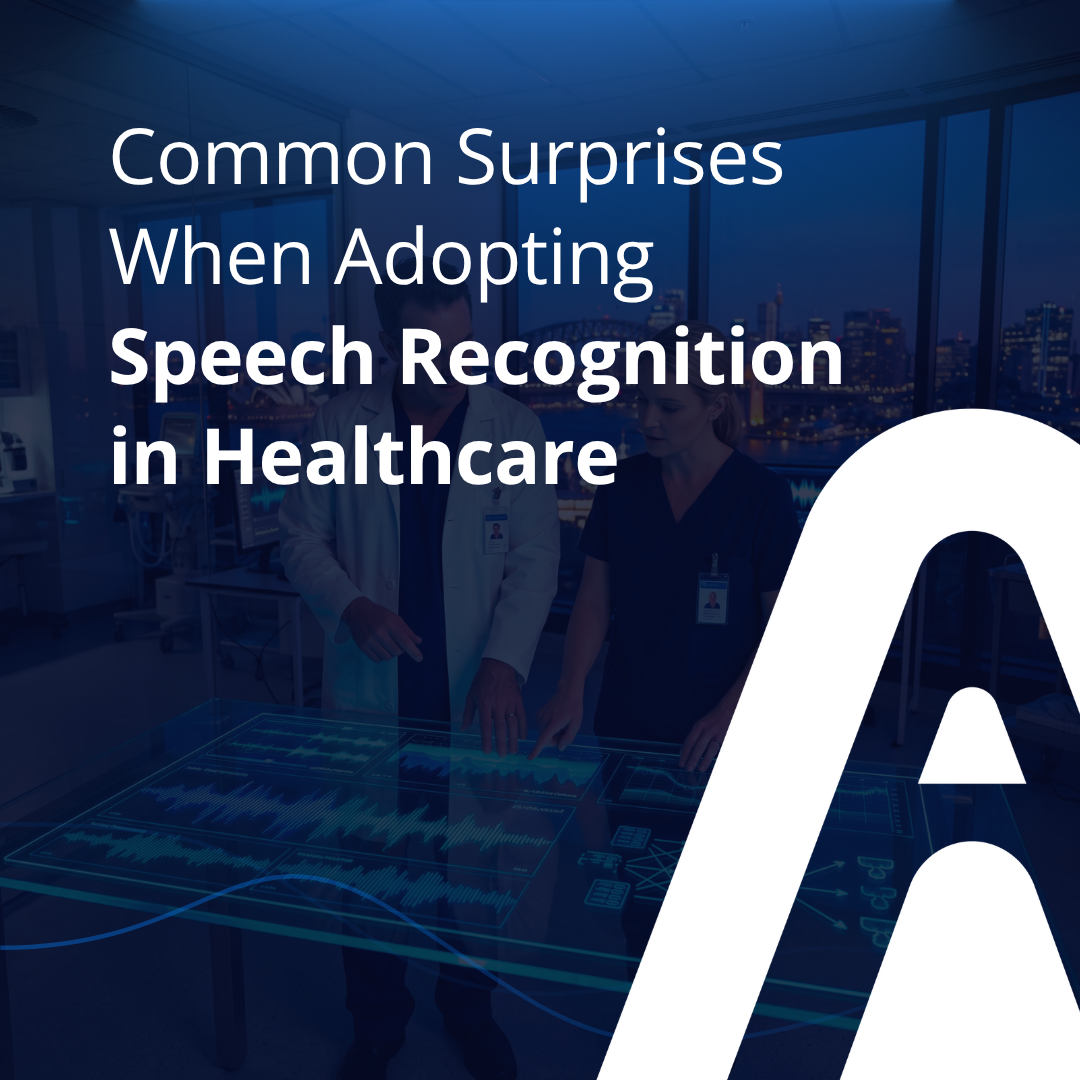
In modern Australian clinical practice, adopting speech recognition in healthcare offers immense promise for reducing administrative burdens. While clinicians often expect simple voice dictation, real-time implementation reveals distinct operational nuances, requiring subtle workflow adjustments to ensure accurate, compliant, and structured documentation across every patient consultation.
Integrating speech recognition into daily practice presents several key operational challenges:
Bridging ambient voice automation with structured clinical verification yields exceptional documentation accuracy and regulatory compliance. This balanced approach streamlines consultation workflows, protects record consistency, and significantly reduces administrative fatigue for healthcare teams.
.webp)
The shift from manual typing to natural consultation presence
Removing manual keyboards during consultations introduces a profound psychological shift for medical practitioners. Without a screen acting as a barrier, clinicians can regain direct eye contact and foster deeper patient trust. Practitioners quickly adapt to vocalising their diagnostic reasoning, which naturally engages the patient in the clinical process. This transition from manual data entry to a highly conversational presence creates a supportive environment, ultimately enhancing the overall quality of care and reinforcing the therapeutic alliance.
Navigating acoustic environments and multi-speaker dynamics
Adopting speech recognition in healthcare reveals the complexities of diverse acoustic environments in Australian clinics. Ambient technology must effectively interpret subtle accent variations, background interruptions, and overlapping dialogue between multiple speakers. Modern systems are designed to filter clinical crosstalk and capture the true intent of the consultation accurately. This capability ensures that even in bustling medical centres, nuanced conversations are meticulously documented without sacrificing the natural flow of the examination.
Redefining administrative roles from manual drafting to verification
Instead of just replacing support staff, modern voice automation elevates administrative roles from manual drafting to critical clinical verification. Medical receptionists and secretaries transition into quality assurance specialists who audit generated transcripts for accuracy. This team-based approach empowers staff to oversee complex documentation workflows while ensuring that essential records remain error-free. Ultimately, practice administrators spend less time typing and more time managing clinic efficiency, improving overall patient coordination.
Converting unstructured narrative into standardised clinical record data
Implementing speech recognition in healthcare effectively transforms conversational clinical prose into compliant, highly structured electronic fields. Advanced platforms effortlessly manage complex medical jargon and regional Australian drug nomenclature, mapping spoken details directly into established EHR templates. This ensures standardised referral formats and accurate diagnostic histories are maintained. Consequently, practitioners can quickly generate structured reports that support ongoing continuity of care across all integrated medical
Have a question?